A personal path to fluency in Yoruba and Igbo
- Client
- Lingawa
- Sector
- Education
- Services
- Product Design, Design System, Brand Identity, UX Research
- Year
- 2026
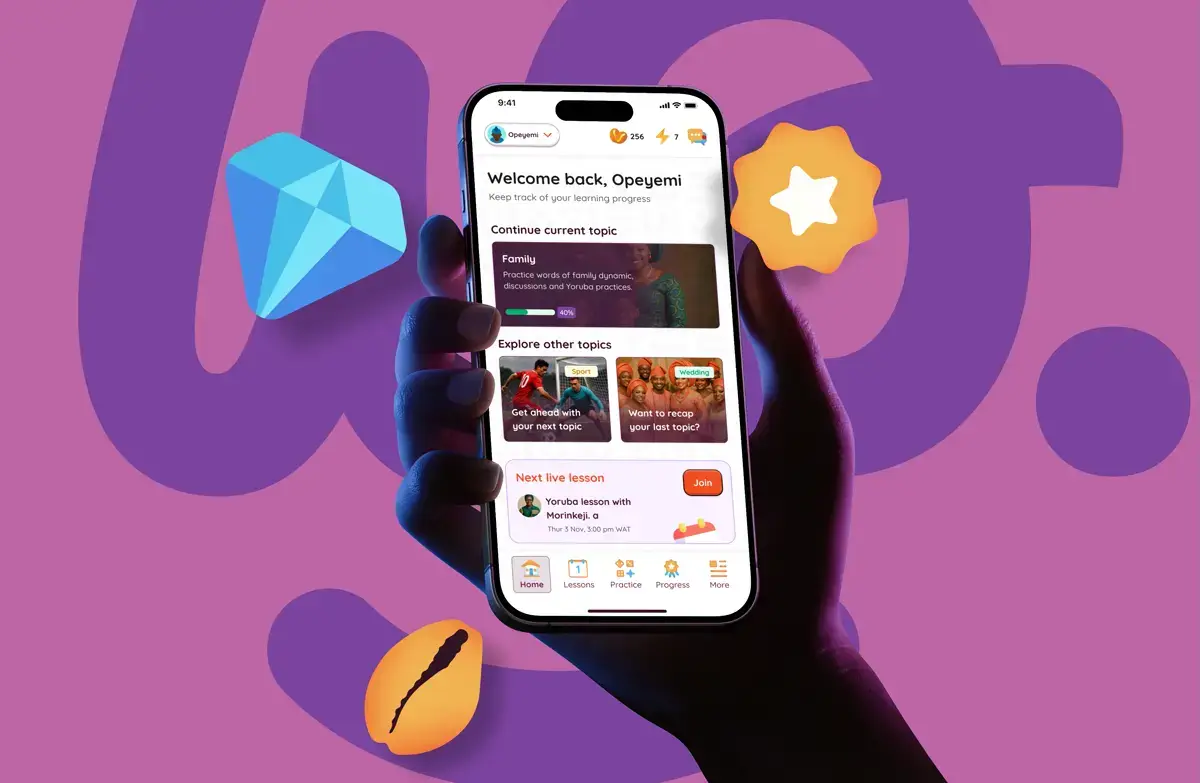
Results
6,000+
learners across the diaspora and beyond
5.0★
on both app stores, and 4.9 on Trustpilot
$1.1M
raised by Lingawa after the product launched
The brief
Learning an African language in the diaspora meant choosing between a tutor you could not always afford and an app that did not teach your language. Lingawa needed to be both, across seven different ways of learning.
Design
What we drew
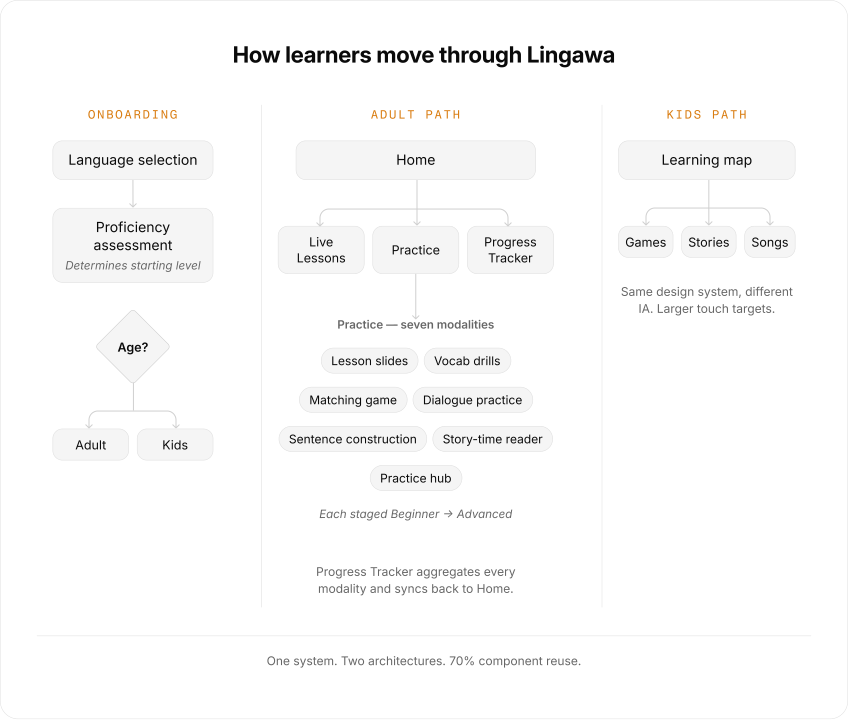
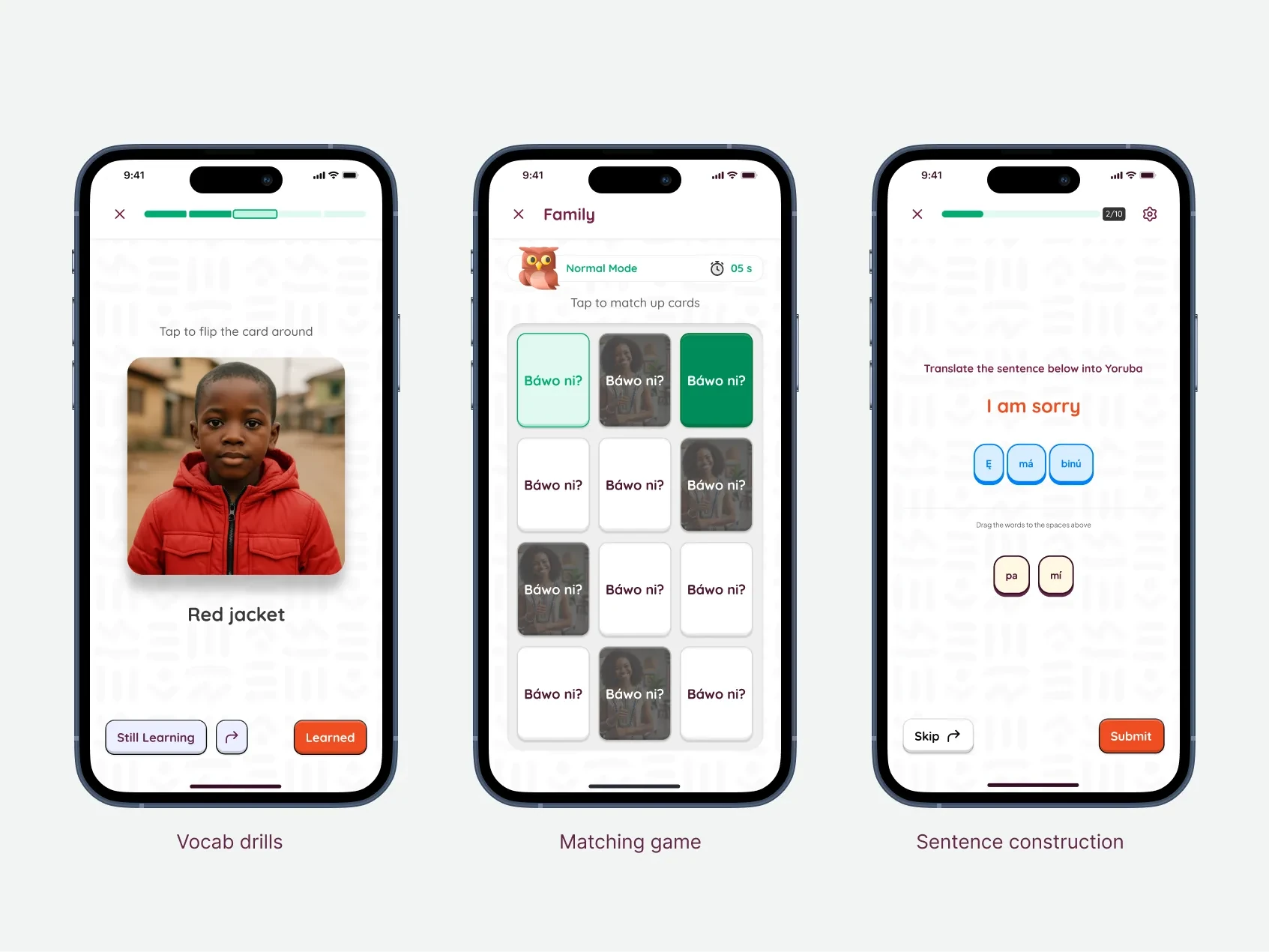
Seven ways to learn the same language (live tutoring, self-paced lessons, conversation practice, and more) that had to feel like one path rather than seven products sharing a login. The design work was mostly about making progress legible across all of them.
The system, built in flight
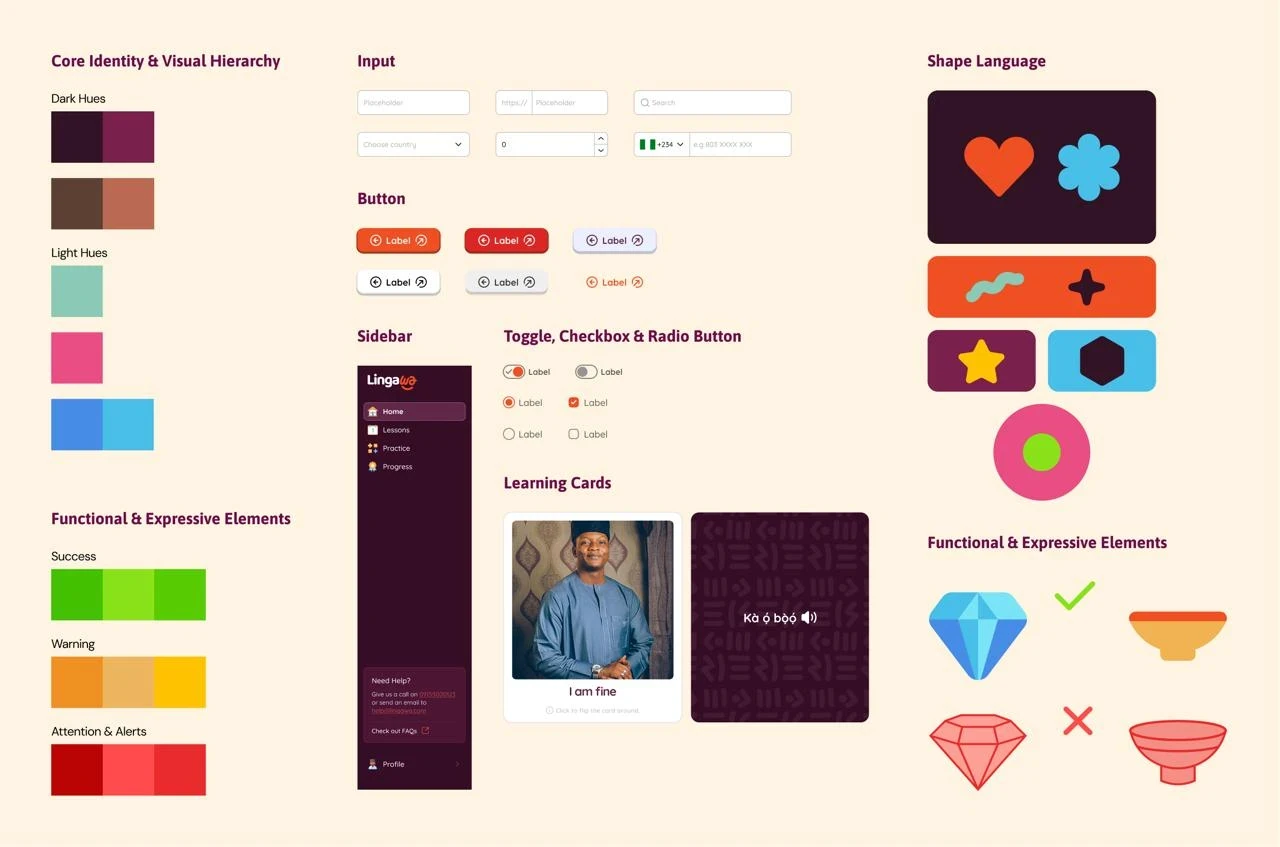
The engineering team was small and needed to build immediately, so the system grew screen by screen: design one, extract what repeats, componentise it, move on. After three screens there were buttons, inputs and a colour system. After ten, a full library feeding every new design.
The cost of that approach showed up in the earliest screens, which carried spacing decisions made before a scale existed. We went back and normalised them once the library had settled.
Outcome
Lingawa serves over 6,000 learners across the diaspora and beyond, and holds 5.0 stars on both app stores and 4.9 on Trustpilot. The company subsequently raised $1.1M.
Design
- Figma
- Design tokens
- Component library
- Mobile-first
Product
- 7 learning modalities
- Progress & streaks
- Tutor booking
- Onboarding
Brand
- Identity
- Type & colour
- App store presence
Decisions that mattered
- 01
Built the design system incrementally rather than up front: design a screen, extract the reusable parts, componentise, repeat. The engineering team was small and needed to start immediately; three weeks of token work before anyone could write code was not available.
- 02
Went back and normalised the earliest screens once the library stabilised, because the first ten screens carried spacing decisions made before the scale existed.
- 03
Kept seven learning modalities inside one navigation model instead of seven separate surfaces, so progress reads as a single path rather than seven parallel ones.