An operating system for cross-border commodity trade
- Client
- Sabi
- Sector
- Commodity trade
- Services
- Product Design, Interaction Design, UX Research, Design System
- Team
- 2 from Ojú
- Year
- 2024
Results
20,000t
of commodity exports moving through the platform monthly, across three continents
48 hrs
to verify a counterparty, replacing days of back-channel reference checks
40+
components holding seven modules and two user perspectives together
The brief
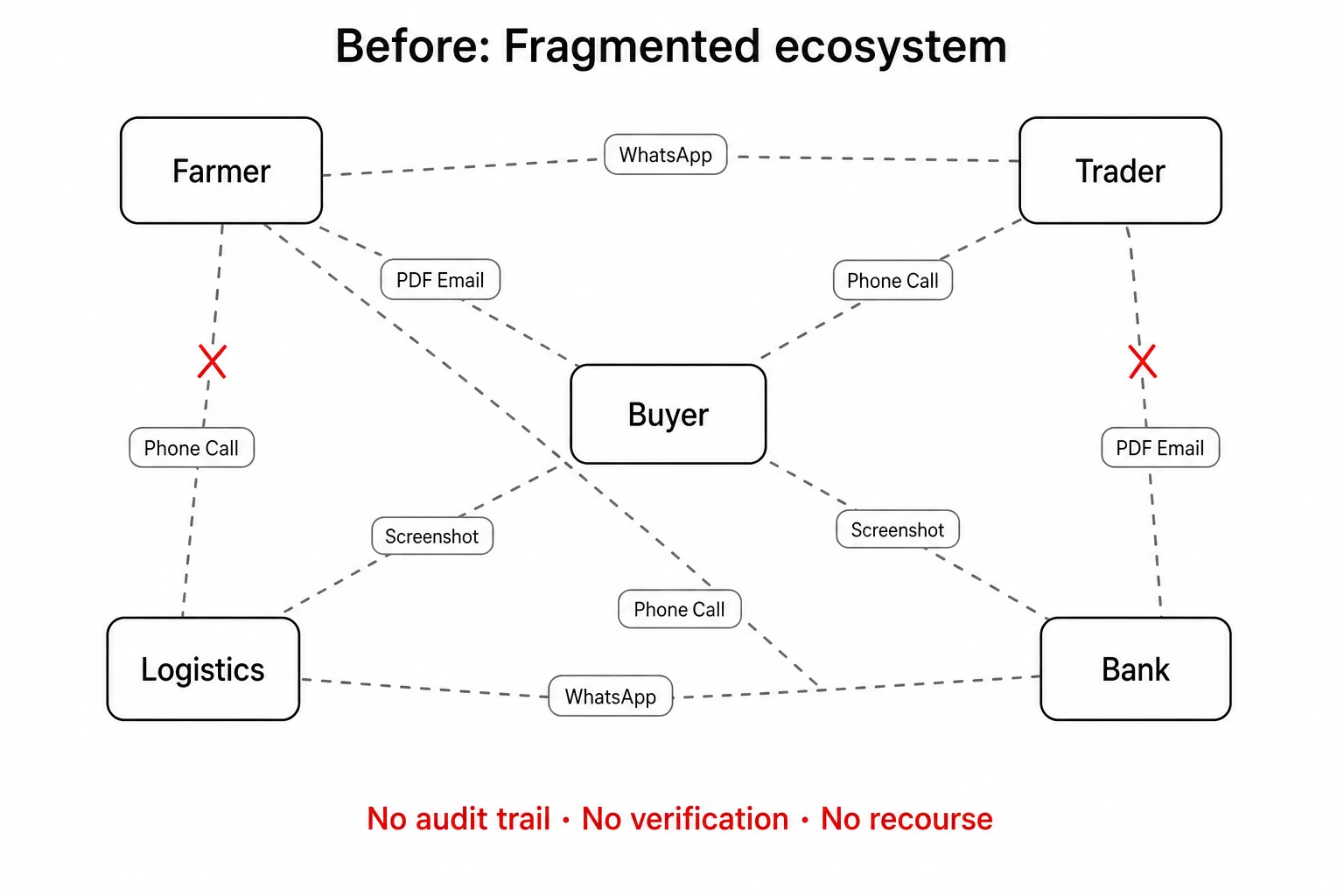
Africa was trading billions in minerals and agricultural commodities on WhatsApp, PDF contracts and manual bank transfers, with no verification, no audit trail, and no way to trace a mineral back to its source.
Design
What we found
Two weeks shadowing commodity traders and logistics coordinators across Lagos, asking one question repeatedly: show me what happens when a deal goes through. The same workflow appeared everywhere. Terms negotiated in voice notes. A PDF contract emailed, printed, signed, scanned, returned. Payment confirmed with a screenshot. Shipment tracking meant calling the driver.
Three things stood out. The tools were fast but the process was slow: a WhatsApp message takes seconds, verifying the person behind it took days. Trust was personal rather than systemic, which works until you run out of people you know. And every failed deal failed the same way: an informal agreement nobody could enforce.
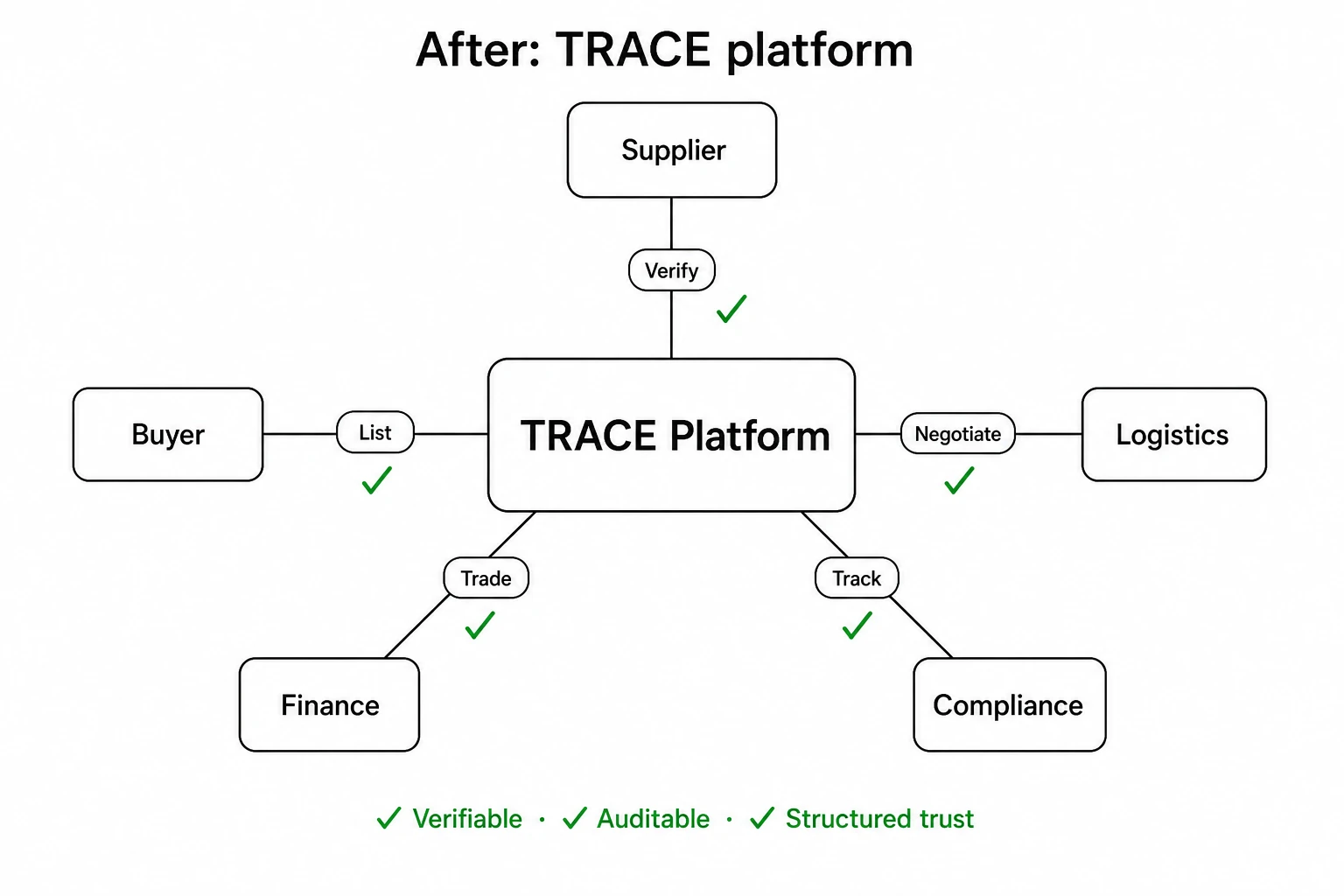
These traders were not missing technology. They were missing structure.
What we drew
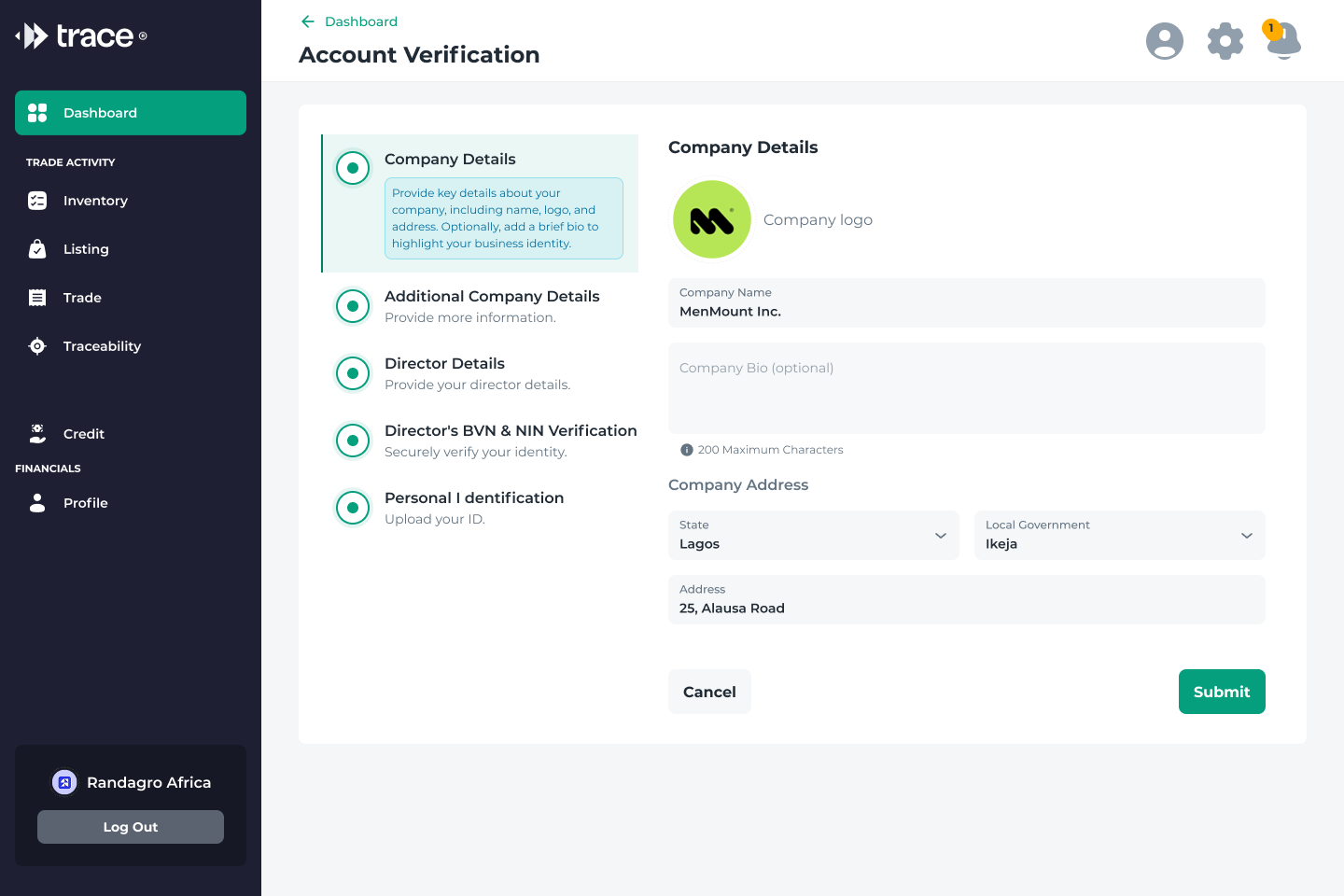
A commodity trade is not one transaction, it is a sequence of trust events. So the product is structured around that sequence, with each module gated on the one before it. A company that has not cleared KYB can see the platform but cannot trade. A product that has not passed verification cannot be listed.
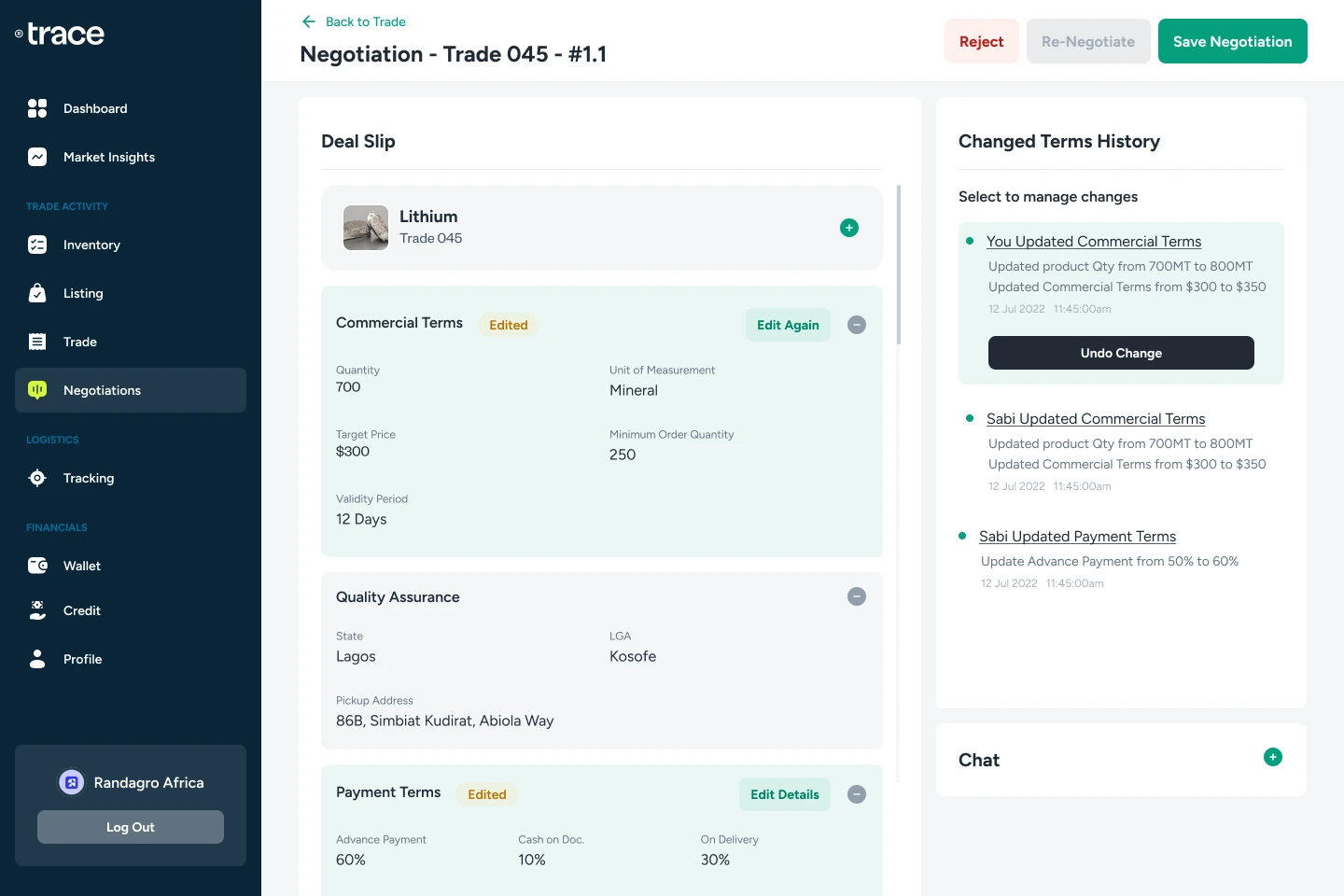
The hardest problem was negotiation: two parties changing the same deal across multiple rounds. Both sides see one deal slip, every change is attributed in a Changed Terms panel, and every change can be undone. The version history is the complete trail from first offer to signed agreement.
Outcome
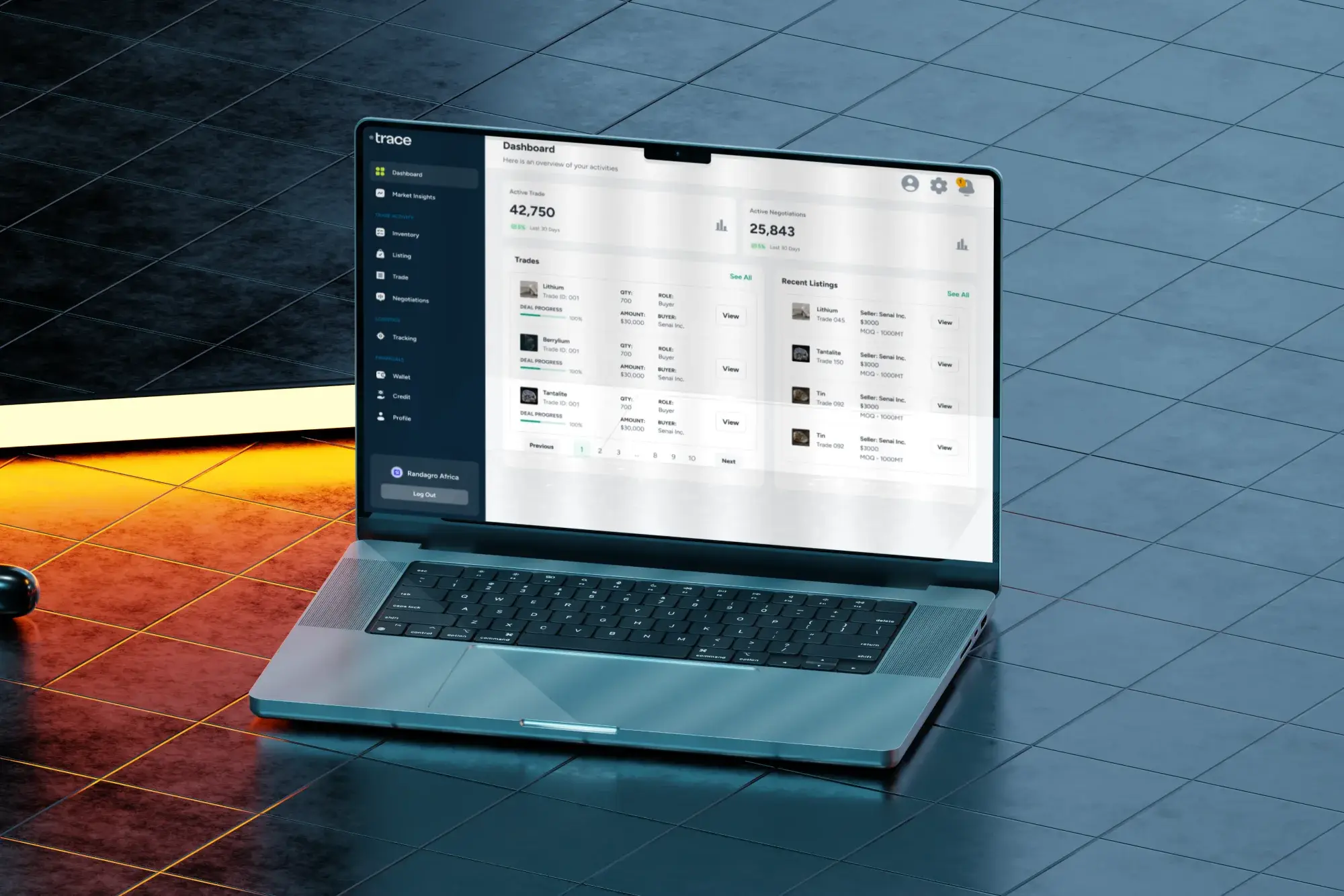
Trace launched as Sabi’s flagship B2B platform and now carries over 20,000 tons of commodity exports monthly across three continents, replacing the WhatsApp-and-spreadsheet workflow with structured, auditable transactions.
Counterparty risk fell from days of informal checking to a 48-hour verification pipeline. Versioned negotiation ended the competing-screenshots problem: both parties can see exactly who changed what and when. And traceability stopped being a compliance checkbox, becoming a core tab in every executed trade.
Design
- Figma
- Design tokens
- Component library
- Interactive prototypes
Research
- Trader shadowing
- Prototype walkthroughs
- Domain-expert reviews
Domains
- KYB & compliance
- Negotiation
- Payment milestones
- ESG traceability
Decisions that mattered
- 01
Replaced the chat-based negotiation model with a versioned deal slip. Free-form messages gave engineering nothing to enforce and no way to build an audit trail. Structured fields did both.
- 02
Made KYB the front door rather than a settings page. A company can browse before verification and trade only after it, so the architecture enforces trust instead of relying on who knows whom.
- 03
Built traceability as a core tab in every executed trade rather than a compliance export, which made ESG reporting structural instead of after the fact.